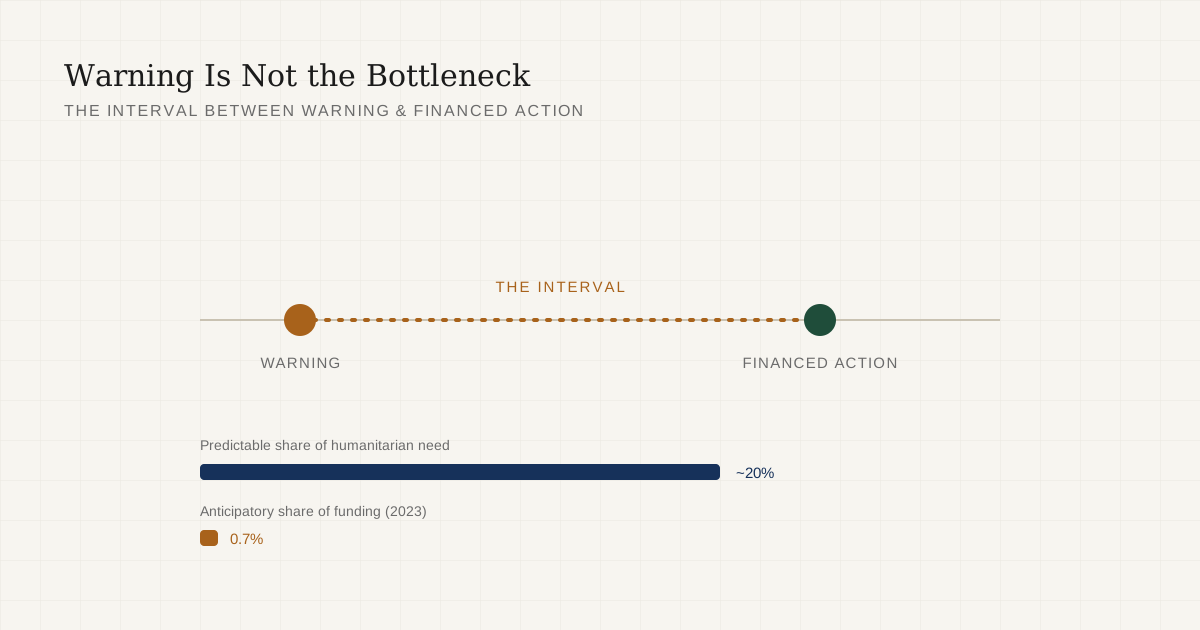
In 2023, of every dollar of international humanitarian assistance, under a cent — 0.7 per cent — was committed before the shock it was meant to meet. The rest arrived after.
Source Development Initiatives; Global Humanitarian Assistance Report 2025.
About a fifth of humanitarian need comes from shocks that were forecast. What fails is conversion: turning a credible warning into money that moves in time.
Where money is arranged in advance, it moves.
Source Development Initiatives.
In 2024 the distance widened. International humanitarian assistance fell 11 per cent — nearly US$5 billion — the largest single-year cut on record, and anticipatory funding stagnated.
Source Global Humanitarian Assistance Report 2025; Global Report on Food Crises 2025.
The Lab reads this as an interval — the distance between a credible warning and a legitimate, financed response — and watches that interval rather than the warning. This is a way of looking, not a settled model. If detection were the bottleneck, better data would help. It mostly is not, so it mostly does not.
The warning never lands
The signal never reaches the person who decides.
Responsibility without a budget
The office that owns the response holds no funds.
The wrong timescale
Funds arrive yearly; the need runs weekly.
Source The Prevention Lab. Better forecasting fixes none of these.
Nepal shows the shape of it. Local governments hold the disaster mandate under the federal constitution, but the finance, hazard data and technical staff largely sit elsewhere. The capability exists; the connective system does not.
The measure that matters
What would change this reading: a year in which the anticipatory share climbs toward the size of the predictable problem, and the interval shortens. Until then, the number to watch is not how early the warning comes — it is how long the money takes to follow.