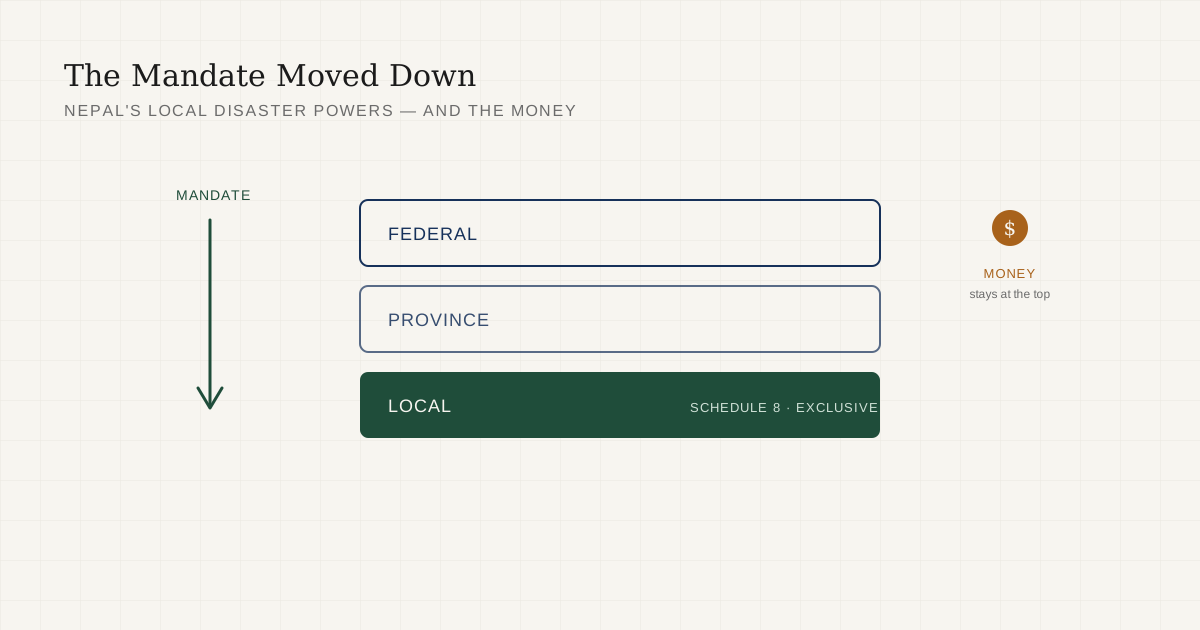
Nepal's 2015 Constitution assigns disaster management twice over. Schedule 8 makes it an exclusive power of local governments — one of 22. Schedule 9 makes it a concurrent responsibility of the federal, provincial and local tiers together. The Local Government Operation Act 2017 lets municipalities legislate and raise funds to carry it out.
Federal
Policy, national response, and emergency powers (Articles 267 and 273).
Province
Provincial coordination and support within the concurrent list.
Local
Disaster management is an exclusive local power — the tier closest to the hazard.
Source Constitution of Nepal 2015, Schedules 8 & 9; Local Government Operation Act 2017.
Concurrent by design
Schedule 9 also makes disaster management a shared responsibility of all three tiers — a shared responsibility of every layer of governance, but more so at the lower level.
The mandate sits nearest the hazard. The money did not follow it down.
Source IIED.
Even the generous measure stays under a third; earlier work put the amount actually reaching the local level below a tenth. The mismatch is in time as much as volume: sea walls and drainage have multi-year lead times, while a municipal budget is written a year at a time.
Three options, with their trade-offs
Multi-year municipal windows
Ring-fenced, multi-year grants a city can plan an infrastructure programme against. Trade-off: planning certainty against central control.
Trigger-based local finance
Money released on a named trigger before the shock — the anticipatory-action model. Trade-off: speed against basis risk.
Pooled or insured cover
Municipal risk pools or parametric payouts on a measured event. Trade-off: off-budget timing against premium cost.
Source The Prevention Lab.
Decide the unit and the clock first
Two facts most ministries do not hold: which tier can actually absorb the money, and the measured lag between a warning and a local response. Decide which tier holds the money, and on what timescale, before choosing an instrument.